The red piping makes painting Prussian artillery a
challenge, but these are finished now.
I originally painted the harness black, but decided buff gave a better result - my check of references was inconclusive.
Wednesday, July 3, 2013
Peter Laing – Athenian Hoplites and archers
These Peter Laing hoplites and archers were purchased around
the second half of the 1970s and probably painted in the late 1980s. I don’t recall ever using them in anger –
there is not enough anyway, but adding in a few early Minifigs and I can just
about do an army for DBA. I am pretty
sure these figures were catalogued as Athenian (the other Hoplites being
Spartan). Having now checked against the
catalogue put up at the Wargaming Miscellany blog these figures are F401 and
F405. See: http://wargamingmiscellany.blogspot.com.au/2013/07/in-praise-of-peter-laing-miniatures.html
Anyway, just an excuse to add a bit of nostalgia given I had
seen some other posts on Peter Laing figures.
I had being toying with ancients using the Airfix sets and
conversions. These Peter Laing figures were the first 15mms
I ever bought, but I didn’t proceed to build an army from them (still a poor
student). By the time I could afford an
army the Tin Soldier figures had arrived and once I started with them, their
style had me locked in. I remember
painting these as a novelty and also to just get them off the lead mountain
(which in those days was just a slight raise compared to now-a-days’ lofty
peak).
Monday, June 24, 2013
Pyrrhic vs Early Carthaginian
An 800 point a side Field of Glory 2.0 game. I ran my Greeks as Pyrrhic and faced Mark's Cathaginians.
The terrain was very agricultural with fields and vineyards
everywhere and one steep hill on my left.
I deployed my light infantry on the hill and placed all my cavalry on my
right, the centre was made up of four hoplite units and two pike blocks plus
the elephants.
The battle started as I intended, but I couldn’t quite get
all my forces in.
My Greek light cavalry went down in a heap even with their
general fighting in the front rank. Nothing like rolling a three for the morale test and a one as the death role.
A bit further along and my slingers evaded successfully
after getting the worse of a volley of javelins. In the background the Carthaginians are
moving more troops to their left.
On my left the Greek javelinmen tried to close with the enemy
slingers.
It got interesting when some Carthaginian foot came up to
support the slingers and the left most unit of Hoplites turned on them and
charged them in the field. They maybe
disordered, but the Greeks had the Carthaginian foot sandwiched.
Back on the right the Greek lancers had seen off one of the
units of Numidian light cavalry while the Greek heavy cavalry ignored the other
unit of Numidians and started to face off against the Carthaginian cavalry
which was pushing down the side of Pyrrhic infantry.
The right of the Greek centre had been chasing off the
Carthaginian javelinmen and ended up engaging their heavy chariots in a bloody
affair. Pyrrhos himself joined in to
help things at this crucial stage of the battle.
Pyrrhos made all the difference and the chariots were
defeated after they forgot to break-off.
The main battlelines clashed at this point.
The ignored Numidian light cavalry on the right had made it
round to the Pyrrhic camp by this stage, but found it fortified (and defended by a truly
ancient stand of Peter Laing 15mm figures, put there for show only, but they
kept the Numdians out).
The cavalry on the right is fully engaged. Even though they had the numbers and quality
it started out badly for the Greeks until they got support and finally
overwhelmed the Carthaginian cavalry, effectively securing the right flank. The Carthaginian light infantry is being chased by the Greek lancers, just out of pictures. The Greek right wing commander had joined heavy cavalry and killed his opposite number.
On the left the Hoplites held the field while the javelinmen
got into an inconclusive fight with the Carthaginian slingers. The presence of the Hoplites secured the left
of the Greek line.
In the centre it was a hard fight. Pyrrhos had joined in but was killed, causing
one of the pike blocks to fail their morale. The Hoplites and the elephants
fought extremely well and broke their opponents, winning the battle, it was just
a pity Pyrrhos wasn’t around to see it. A
true Pyrrhic victory!
FOG 2.0 played without any issues.
Saturday, June 22, 2013
Prussian Generals
These bases finish off the commanders needed for my Napoleon’s
Battles Prussian army, a corps commander and four divisional generals. The figures are Old Glory and were a joy to
paint.
I particularly like this last figure. He's been given command of the reserve and really is not amused, wanting to be off waving his sword around with his fellow officers.
Thursday, June 20, 2013
Dune
Finally got to see the movie Dune again, but oh my, how it
has dated. And so stylistic! It was only after watching halfway through
that I could relax into what my partner had referred to as a soap opera. I have listened to the sound track (by Toto
but with a central piece by Brian Eno) a lot and this made the movie very
familiar even though I didn’t remember that much of it. I had also played the boardgame a lot (the
Avalon Hill one based on the book, not the one based on the movie – which I
have not seen and only know about from doing my research for this post) and
fondly remember much of the affected dialogue we used while playing.
Information about the boardgame can be found here http://boardgamegeek.com/boardgame/121/dune
and here http://en.wikipedia.org/wiki/Dune_(board_game).
Sadly I don’t have a copy and I see it sells for a premium
on eBay. At least I now have the book,
just have to find the time to read it.
Sunday, June 16, 2013
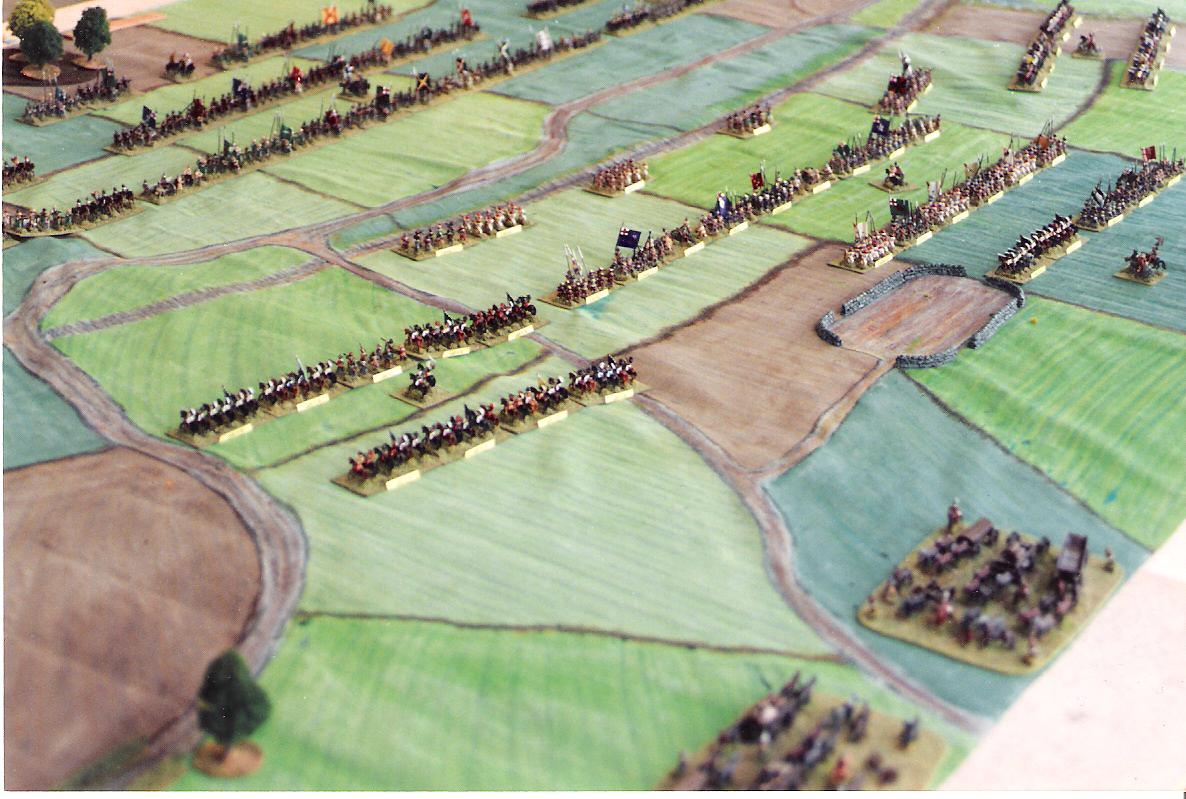
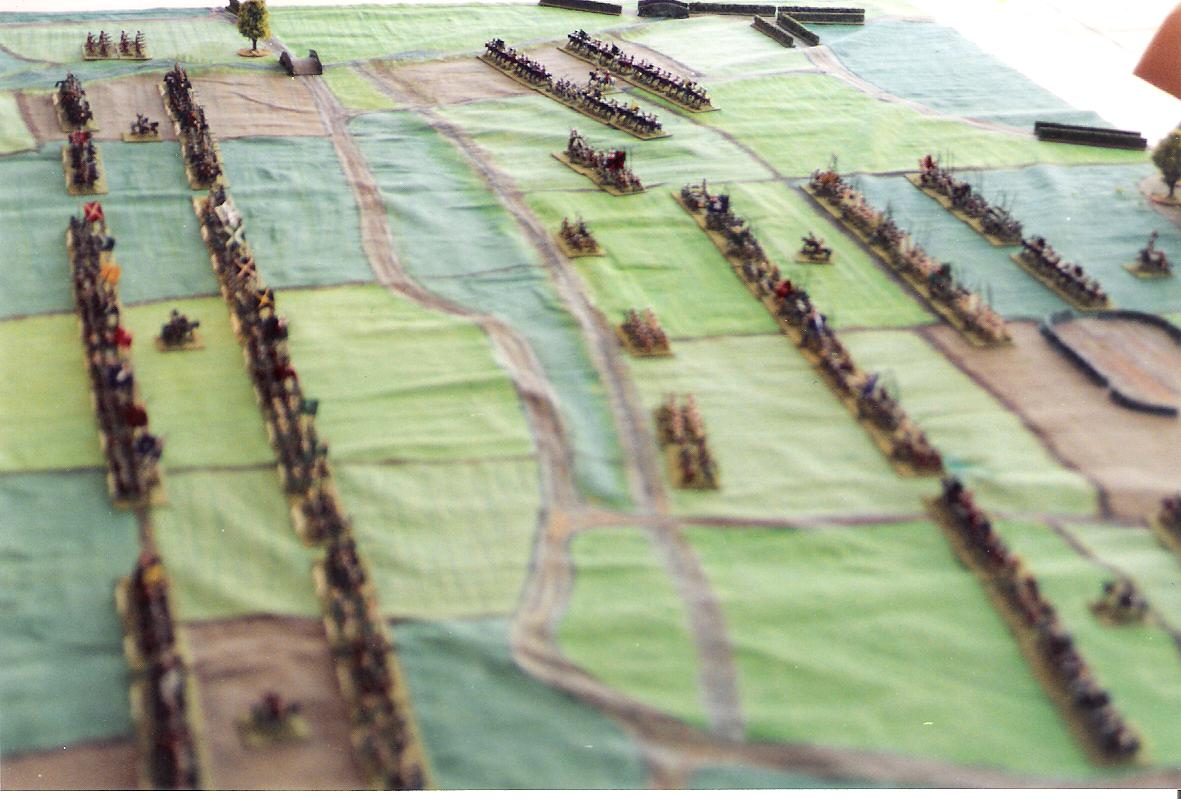
Terrain Sheet
I was looking through my blog reading list and saw a post
about a game at the Canberra Games Society (I used to be a member). Looking at the pictures I am thinking, hey,
that terrain sheet looks familiar. Going to my
pile of wargaming photos waiting to be scanned I find pictures of the same sheet in use from
what must be twenty years ago.
I’ve no recollection of what the game was, but at a guess
ECW or renaissance in 15mm or possibly smaller scale. I wasn’t playing; I just took the pictures
for inspiration.
Here is the link to the recent post showing the same sheet
still in use: http://trailape.blogspot.com.au/2013/06/maurice-at-canberra-games-society.html
Sunday, June 9, 2013
Classical Greek versus Indo-Scythian
My Classical Greek army was born in the days of WRG 6th
Edition – Later Hoplite Greek as the army was called by those rules. It migrated to 7th Edition, but
always performed poorly. Apart from
adding new units to be able to form Alexandrian and Successor armies, it mostly
languished. Of recent times it had only
fought in DBA games. It was with some
interest and nostalgia that I chose to run them on Friday’s Field of Glory game
(especially as I feel I am getting a better handle on the rules now).
The army is based on the hoplite, heavy foot armed with
spear. It was hard to get a photo
showing them all.
This is my left wing as deployed with slingers, Cretan
archers and javelin armed skirmishers to the fore backed by Thracian foot and
light horse.
On the right was positioned more archers and javelinmen,
backed by another unit of light horse and in the background the Sacred Band of
elite hoplites and behind them the Thessalian heavy cavalry.
Action commenced immediately on the left as a mass of enemy
light horse rode down the poor javelinmen who had discovered the fields to
their front (now rear) were no protection at all. The Thracian horse fought valiantly against the
mounted bowmen, but it turned out they were swordsmen too and things were
looking bleak.
The money shot – the Greek phalanx as it advances in the
centre.
Right on the money – the Greek commander inspires his
troops.
Thracians to the rescue! The Thracian horse recovered and it was all over for their opponents when the Thracian foot hit them in the flank. The
left flank is stabilised, somewhat – the enemy light horse who had crushed the
javelinmen went on to rout the Cretan archers who had failed to keep a suitable
distance between themselves and the enemy. The
victorious horsearchers then went on to loot the Greek camp, but did little to
affect the battle after that.
On the right there was a long battle between the Greek light
horse and the opposing Scythians until they were able to bring up a second unit
and take the Greeks in the flank.
However this was also indecisive as the Greek archers were secure in the
vineyard and the Greek heavy cavalry were able to contain the enemy light horse
even though they couldn’t catch them.
Back in the centre ... POOF! This unit of hoplites collapsed in one
round which was not expected.
As we can see in this view from the Scythian centre they
had more of these killer cataphracts and elephants too.
On the left the Thracians continued their march to glory, overrunning
the Indian foot.
Revenge! Drilled
hoplites take the over confident cataphracts in the flank – they had failed to
turn to meet this threat and paid for it.
Finally the Greek main battleline gets engaged. It is hard going. The pond, proudly captured by the Greek
rightwing javelinmen (their only achievement), interfered with the Greeks
closing to fight and they weren’t able to initially use their superior numbers.
The Thracians, after an initial surprise – arrows can hurt –
destroy the Indian archers and go on to take the enemy camp. The slingers got in a lucky shot against the
reforming cataphracts and they routed.
The other Indian archers kept up a mighty barrage, but failed to charge
when they had the chance.
All over. Another
unit of Hoplite breaks before the combined weight of cataphracts and elephants,
but note the victorious Greeks in the background.
A very exciting game with lots of action covering the whole
table with just about every unit engaged.
It was a bloody affair and both armies reached their limits very close
to the same time.
It was wonderful to see my Tin Soldier Greeks in all their
glory. Having started collecting them in
the 1980s they are truly ancient.
The Indo-Scythians are from Mark’s collection along with the
terrain.
Subscribe to:
Posts (Atom)
.jpg)
.jpg)